
Skin Concerns · May 31, 2026 · 5 min · By Hugo Lindenbaum
BBL Photofacial for Rosacea: What It Can and Cannot Do
How broadband light therapy addresses rosacea symptoms, who benefits most, and what realistic outcomes look like.
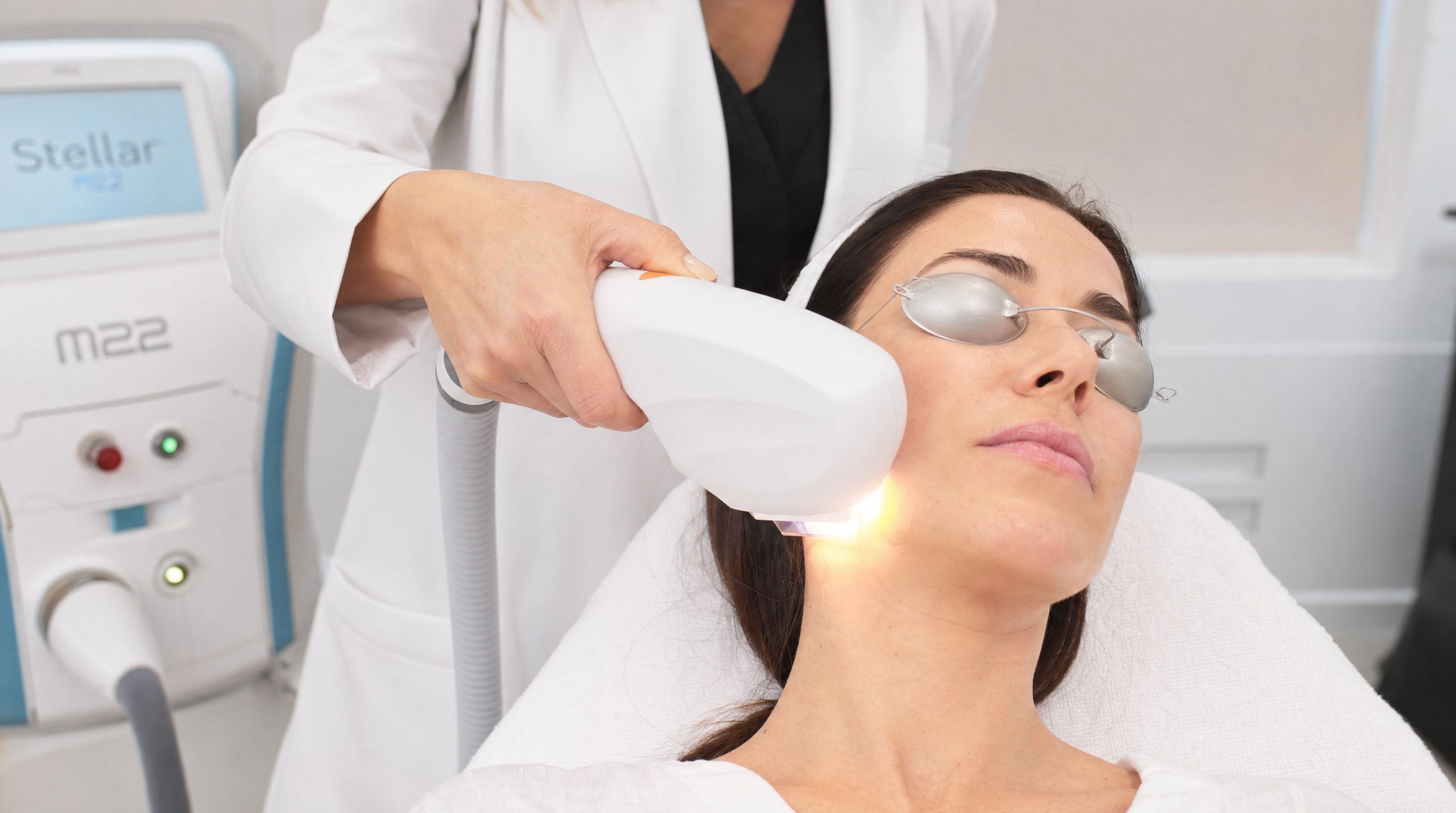
BBL photofacial for rosacea has become one of the most commonly recommended light-based treatments for the condition, but understanding its actual mechanism, limitations, and candidacy criteria is essential before pursuing it. Broadband light (BBL) therapy operates on a different principle than some other laser modalities, and its effectiveness for rosacea depends partly on which subtype a patient has and how their skin responds to thermal injury.
Rosacea is a chronic inflammatory condition characterized by persistent facial flushing, visible blood vessels, papules, and sometimes pustules. It affects an estimated 16 million Americans, with presentation varying widely. The condition is not curable, but it can be managed. BBL photofacial treatment targets the vascular and inflammatory components by using filtered broadband light wavelengths, typically in the 500 to 1200 nanometer range, to heat and damage small blood vessels and reduce inflammatory pathways in affected tissue. For an independent overview, see Rosacea: causes, triggers, and treatment.
When BBL light energy is absorbed by oxyhemoglobin in dilated capillaries and by melanin in surrounding tissue, it generates heat. This thermal injury triggers a controlled inflammatory response that ultimately leads to vessel closure and remodeling. Over time, the cumulative effect is reduced erythema (redness), fewer visible telangiectasias (broken capillaries), and decreased frequency of flushing episodes. The mechanism is photothermolysis, not laser ablation, which is why it works differently than fractional or fully ablative lasers.
BBL photofacial is most effective for rosacea subtypes 1 and 2, which present primarily with flushing and vascular dilation. Patients with prominent flushing, persistent erythema, and visible blood vessels tend to see the best results. Type 2 rosacea, which includes papules and pustules, may respond well, though the vascular improvement is typically more dramatic than the inflammatory papule reduction. Type 3 rosacea, characterized by rhinophyma or thickened, nodular skin, responds poorly to BBL alone because the structural changes require different intervention.
Candidacy also hinges on skin tone and photosensitivity. BBL photofacial is generally safe and effective in Fitzpatrick skin types I to III. Darker skin tones (types IV to VI) carry higher risk of post-inflammatory hyperpigmentation, paradoxical erythema worsening, and uneven results because BBL wavelengths can be absorbed nonspecifically by melanin. Patients with darker skin considering rosacea treatment may be better candidates for Nd:YAG laser, which has longer wavelengths and penetrates deeper without absorbing as readily in superficial melanin. For related context, see our note on Nd:YAG vs Alexandrite for laser hair removal: Which technology works best?.
A typical BBL photofacial course for rosacea involves 4 to 6 sessions spaced 3 to 4 weeks apart. Each session lasts 15 to 30 minutes. During treatment, patients experience a warm, snapping sensation as pulses are delivered across the face. Topical anesthetic cream or cooling is often used to manage discomfort. There is no downtime; mild erythema and slight swelling may appear immediately after and typically resolve within a few hours to one day. Some patients report transient crusting or darkening of small vessels, which fades over 7 to 10 days.
Results are not immediate. Improvement becomes visible over the course of 2 to 4 weeks as vessels remodel and inflammation subsides. After the full course, patients often see a 50 to 75 percent reduction in visible redness and flushing frequency, though individual response varies. The results are not permanent; rosacea is a chronic condition, so maintenance sessions 1 to 2 times per year are typically recommended to sustain improvement.
Cost ranges from 300 to 1000 dollars per session, depending on treatment area size, provider location, and device technology. A full course of 4 to 6 sessions can total 1200 to 6000 dollars. Many insurance plans do not cover BBL photofacial because it is classified as a cosmetic or elective procedure, even when rosacea is being treated. Some dermatologists classify it as therapeutic rather than cosmetic, which may increase the likelihood of partial coverage.
BBL photofacial works best when combined with a comprehensive rosacea management plan that includes gentle skincare, topical medications (azelaic acid, metronidazole), oral antibiotics if needed, and trigger avoidance. Light therapy addresses the vascular and inflammatory components, but it does not replace medical management. Realistic expectations are essential: significant improvement in redness and visible vessels is achievable for many patients, but complete clearance is rare, and maintenance is required for sustained benefit.
Related reading: Picosecond vs Q-switched laser: Which technology removes pigment better?, Halo Laser vs Fraxel, Compared.