
Cost & Recovery · May 21, 2026 · 5 min · By Ezra Caulfield
What Laser Hair Removal Costs in Beverly Hills
A reported breakdown of laser hair removal Beverly Hills cost, covering how the technology works, who qualifies, and what to expect.
Laser hair removal Beverly Hills cost is one of the first questions people ask when researching long-term hair reduction, and the answer depends on several intersecting factors: treatment area, skin tone, hair color, the laser platform used, and the number of sessions required. Understanding the pricing structure means understanding the clinical logic behind it.
How the technology works For an independent overview, see Laser hair removal: overview and what to expect.
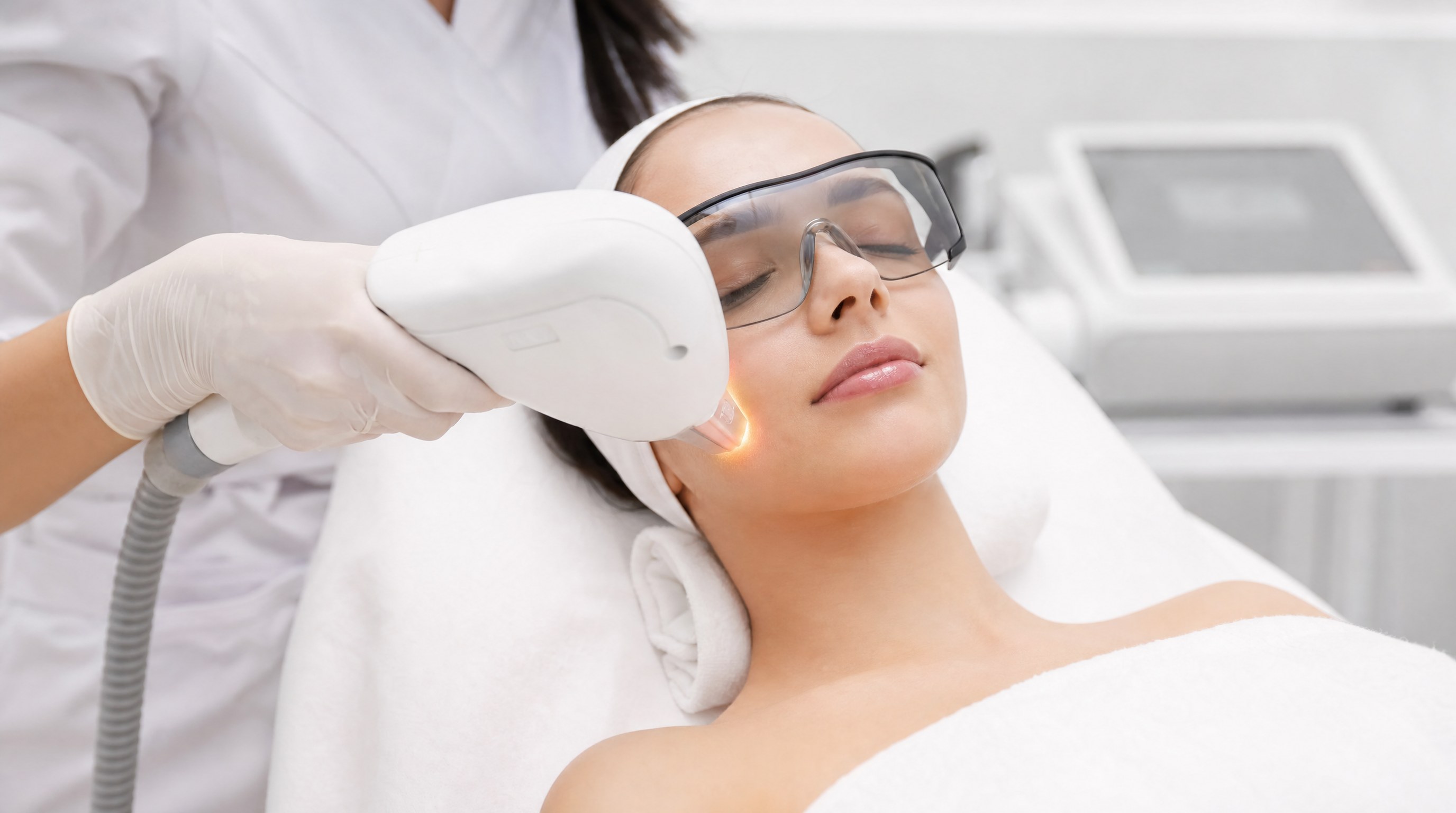
All laser hair removal systems operate on the principle of selective photothermolysis. A calibrated wavelength of light is absorbed preferentially by melanin in the hair shaft and follicle. The absorbed energy converts to heat, which damages the follicle's ability to produce new hair without meaningfully injuring the surrounding skin. The key word is "preferentially," because the system works best when there is clear contrast between the pigment in the hair and the pigment in the surrounding skin. That contrast is what allows the laser to target the follicle without overheating the dermis.
Three wavelengths dominate clinical use. The 755 nm alexandrite laser is fast and effective on lighter skin tones with dark hair. The 810 nm diode offers a middle range of melanin absorption and works across a broader range of skin types. The 1064 nm Nd:YAG penetrates deeper and absorbs melanin less aggressively, making it the standard recommendation for darker skin tones, including Fitzpatrick types V and VI, where shorter wavelengths carry a higher risk of post-inflammatory hyperpigmentation or burns. Choosing the wrong platform for a given skin tone is not merely a cosmetic concern. It is a safety concern, and reputable Beverly Hills clinics will conduct a thorough Fitzpatrick assessment before any treatment begins.
Who qualifies
Candidacy is primarily determined by the hair-to-skin contrast described above. Individuals with dark, coarse hair on lighter skin see the most consistent results. Light blonde, red, white, or gray hair contains little melanin and responds poorly to current laser technology regardless of skin tone. Active tanning, recent sun exposure, and certain photosensitizing medications are temporary contraindications. A treating clinician will also ask about hormonal conditions such as polycystic ovary syndrome, which can drive continued follicle activity and reduce the permanence of results.
What recovery looks like
Recovery from a laser hair removal session is generally minimal. Most patients experience perifollicular edema, a mild localized swelling around each treated follicle, and some degree of erythema, or redness, for a few hours to a day. The skin may feel like a mild sunburn. Crusting is uncommon with properly calibrated settings. Sun avoidance and broad-spectrum SPF application are standard post-care instructions for at least two weeks following each session. Patients typically resume normal activity the same day. For related context, see our note on Pulsed Dye Laser vs IPL for Rosacea Redness: What the Clinical Evidence Shows.
For a deeper clinical breakdown of specific protocols and technology comparisons, consult an experienced laser hair removal provider.
Realistic results
No laser system achieves 100 percent permanent hair removal for every patient. The clinical term used by the FDA is "permanent hair reduction," meaning a significant reduction in the number of terminal hairs that regrow. Most patients require six to eight sessions spaced four to eight weeks apart, depending on the treatment area and the hair growth cycle. The face and bikini area often need more sessions than the legs or back. After a full series, many patients experience 70 to 90 percent reduction in hair density, with periodic maintenance sessions once or twice a year for residual growth.
Cost in Beverly Hills
Pricing in Beverly Hills reflects both the operational costs of a high-end market and the caliber of equipment clinics invest in. Single sessions for small areas such as the upper lip or chin typically run 75 to 200 dollars. Medium areas, including the underarms or bikini line, generally fall between 150 to 350 dollars per session. Larger areas such as the full legs or back range from 400 to 900 dollars per session. Full-body packages, which bundle multiple areas across a complete treatment series, are frequently offered at a discount and can range from 2,500 to 6,000 dollars depending on the clinic, the technology, and the number of sessions included.
Medical spas staffed by licensed clinicians and equipped with FDA-cleared devices tend to price higher than franchise chains, but the differential often reflects meaningful differences in assessment protocols and device quality. Clinics using older or lower-powered platforms may quote lower per-session rates while requiring more sessions to achieve equivalent results, which can erode the apparent savings.
The most useful question to ask during any consultation is not simply what a session costs, but what the clinic's expected session count is for the specific area and skin type, and what the per-session price implies for total treatment cost. That calculation gives a more accurate basis for comparison across providers than any single-session rate alone.
Related reading: Lasers for pigment and the special problem of melasma, Can Lasers Shrink Large Pores? What the Science Actually Shows.