
What to Know · February 16, 2026 · 6 min · By Ezra Caulfield
Can Laser Remove Milia? What the Treatment Actually Does
Laser for milia is a real clinical option, but the mechanism, candidacy, and realistic outcomes deserve a clear-eyed look.
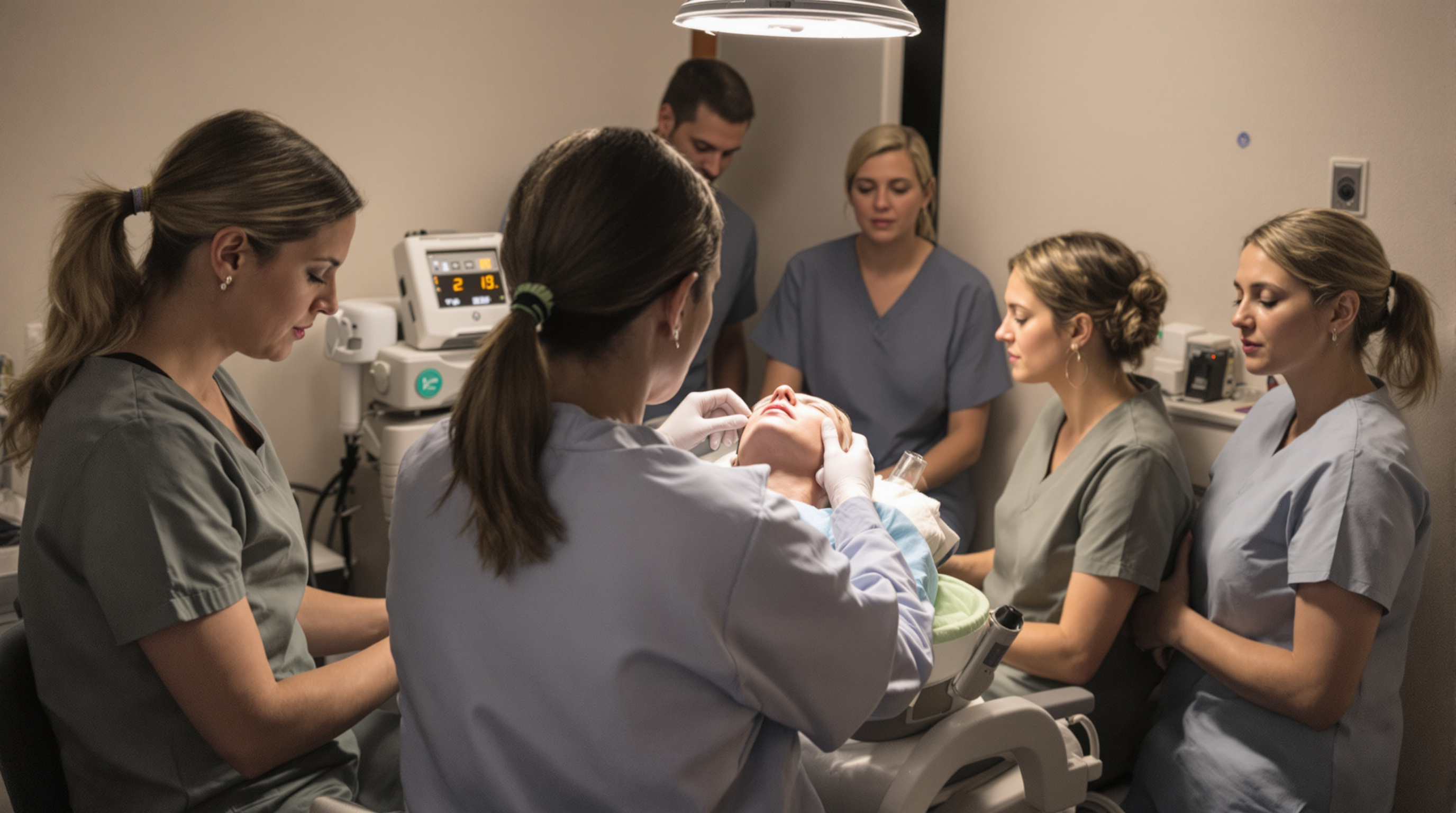
Laser for milia has moved from a niche dermatology tool into mainstream cosmetic clinics over the past decade, and for good reason. Milia are keratin-filled microcysts that sit just beneath the surface of the skin. They do not drain on their own the way a regular comedone might, and topical products rarely dissolve them. That physical reality is exactly what makes certain laser and light technologies a logical match.
What milia actually are matters for understanding why lasers work on them at all. Each milium is a tiny, enclosed sac, typically one to three millimeters in diameter, packed with hardened keratin protein. They form when dead skin cells become trapped rather than shedding normally. Common sites include the cheeks, eyelids, and nose, though they appear anywhere on the face and body. Primary milia arise spontaneously. Secondary milia follow skin trauma, blistering conditions, or prolonged use of heavy occlusive creams. For an independent overview, see Lasers and lights: how dermatologists use them.
The classic removal method is manual extraction: a sterile lancet nicks the surface, and the keratin plug is expressed. It works, but it requires a skilled hand and leaves a small wound. Laser approaches offer an alternative that many patients and providers find more precise, especially around the delicate eyelid area where needles carry more risk.
How lasers address milia depends on the device. The two most commonly used platforms are the CO2 laser and the Er:YAG laser, both of which are ablative. They deliver focused infrared energy that vaporizes tissue through rapid heating of intracellular water. Applied at low fluence and very small spot sizes, these lasers can puncture or ablate the outer wall of the cyst without affecting the surrounding skin. The keratin contents are then either vaporized in place or easily expressed after the micro-opening is created. Some providers use the Nd:YAG laser in a non-ablative mode, targeting the cyst contents with selective photothermolysis, though ablative methods tend to show more immediate results.
For a deeper clinical breakdown of laser mechanisms and how practitioners approach different lesion types, a dermatologist consultation is the most direct route.
Skin tone is a relevant consideration. Ablative CO2 and Er:YAG lasers carry a risk of post-inflammatory hyperpigmentation (PIH) in patients with Fitzpatrick skin types IV through VI. In darker skin, the inflammatory response triggered by ablation can stimulate excess melanin production, leaving a dark mark that can persist for months. Many experienced practitioners prefer the Er:YAG at conservative settings for patients with medium to deeper complexions because its chromophore interaction is more superficial and the thermal damage zone is narrower. The Nd:YAG, with its longer 1064 nm wavelength, penetrates deeper with less surface absorption and is generally considered safer for darker skin tones, though its efficacy specifically for milia is more variable. A thorough consultation with Fitzpatrick typing should precede any laser procedure on pigmented skin. For related context, see our note on Vbeam Recovery and Bruising: What to Expect After Treatment.
Candidacy goes beyond skin tone. Patients actively using isotretinoin are typically asked to pause treatment for several months before any ablative procedure because the drug impairs wound healing. Active skin infections, open sores, or a history of keloidal scarring in the treatment area are also standard contraindications. Patients who develop milia secondary to a blistering skin disorder should have that underlying condition stabilized before pursuing laser removal.
What recovery looks like after ablative laser treatment for milia is generally modest. Most patients see small crusted points at each treated site. These resolve within three to seven days with gentle cleansing and a bland, non-comedogenic moisturizer. Sun avoidance and broad-spectrum SPF are non-negotiable during healing to reduce the PIH risk. Downtime is typically less than a week for isolated lesions. Treating a large cluster of milia across both cheeks could mean a slightly longer healing period and a higher chance of temporary redness.
Realistic results are generally very good for primary milia. Individual lesions respond well to a single session in most cases. Secondary milia, particularly those tied to chronic skin conditions, may recur if the underlying cause is not addressed. Patients who continue using thick occlusive products or who have a genetic predisposition to milia formation should expect maintenance treatments over time.
Cost varies by geography, provider, and the number of lesions treated. A single session targeting a handful of milia might run 150 to 300 dollars at a medical spa, while treating a dense distribution across the full face at a dermatology or plastic surgery practice could reach 400 to 800 dollars or more. Some providers charge per lesion, which can make small clusters relatively affordable but large clusters expensive.
Laser is not the only effective treatment for milia, and extraction remains perfectly valid in skilled hands. What laser offers is precision, reduced mechanical trauma in sensitive anatomical zones, and in some patients, a faster or more comfortable experience. Whether it is the right choice depends on the distribution of lesions, skin tone, patient history, and the provider's specific device expertise.
Related reading: Laser Hair Removal for PCOS Facial Hair: How It Works and What to Expect, How to Find a Good Laser Provider in Beverly Hills: A Clinical Vetting Guide.
More in Explainer
View all →- Melasma and Lasers: Why Lower Energy Usually Wins
- Fractional CO2 vs Non-Ablative 1550 and 1927 nm: How to Actually Choose a Resurfacing Laser
- 1550 nm or 1927 nm? What the Two Workhorse Fractional Wavelengths Actually Do to Your Skin
- Ablative vs. Non-Ablative Fractional Resurfacing: What the Wavelength Actually Decides