
Cost & Recovery · February 9, 2026 · 5 min · By Ezra Caulfield
Brazilian Laser Hair Removal in Beverly Hills: Costs, Recovery, and What to Expect
A clinical look at laser hair removal Brazilian Beverly Hills patients pursue, covering mechanism, candidacy, recovery, and realistic costs.
Laser hair removal Brazilian Beverly Hills clinics perform is one of the most requested body-contouring procedures in the region, and for straightforward reasons: the treated area is large, shaving and waxing carry ongoing irritation risks, and the skin in that zone is sensitive enough that a permanent reduction in hair growth carries real quality-of-life value. But the procedure is also one where clinical nuance matters, because the pubic and perianal area involves varied skin tones, follicle depths, and anatomical contours that demand careful device selection.
How the technology works For an independent overview, see Laser hair removal: overview and what to expect.
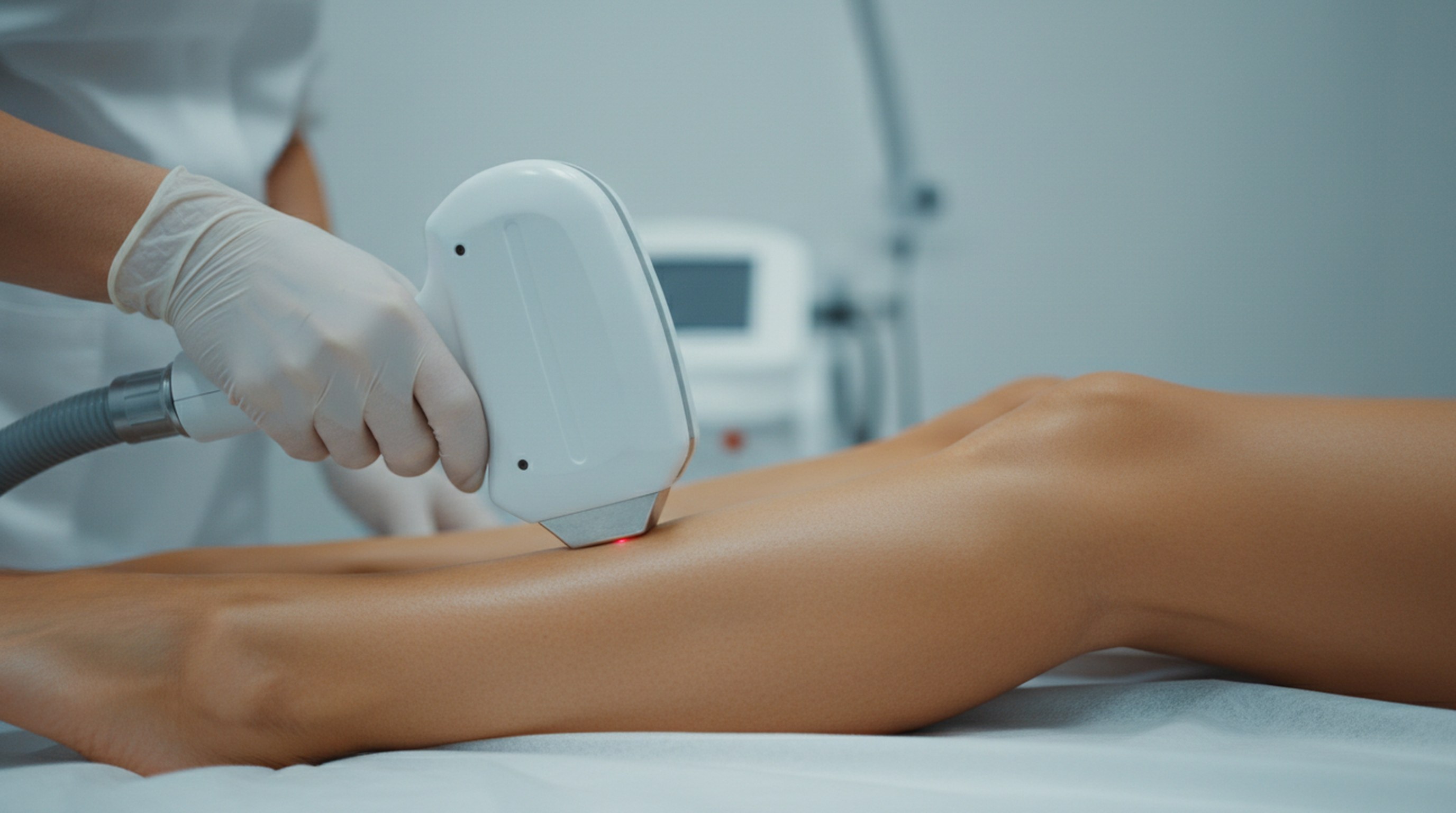
All laser hair removal relies on selective photothermolysis, the principle that a specific wavelength of light can be absorbed preferentially by a target chromophore without destroying surrounding tissue. In hair removal, that chromophore is melanin inside the hair follicle. The laser delivers a pulse of energy, melanin absorbs it, heat travels down the shaft to the dermal papilla and bulge region of the follicle, and thermal damage disrupts the cells responsible for regrowth. Because this only works when the follicle is in its active growth phase (anagen), multiple sessions are required to intercept enough follicles in that window. For a full Brazilian, which covers the labia, mons pubis, perineum, and perianal area, most patients require six to eight sessions spaced four to six weeks apart.
Device selection and skin-tone safety
The choice of laser platform is not cosmetic. The two workhorses in reputable Beverly Hills practices are the alexandrite laser (755 nm) and the Nd:YAG laser (1064 nm). Alexandrite offers strong melanin absorption and works well on lighter skin tones, Fitzpatrick I to III. The Nd:YAG penetrates deeper and its longer wavelength is less aggressively absorbed by epidermal melanin, making it the safer option for Fitzpatrick IV to VI skin and for patients with darker complexions who carry a higher baseline risk of post-inflammatory hyperpigmentation (PIH) and burns if the wrong device or fluence is used. Clinics that offer only one platform have a narrower safe candidacy range, which is worth asking about during consultation. Diode lasers at 810 nm occupy a middle ground and are also widely used with adjustable parameters for broader candidacy.
Who is a candidate
The ideal candidate has a contrast between hair color and skin tone, meaning dark, coarse hair on lighter skin responds fastest. That said, advances in Nd:YAG technology have broadened access significantly. White, gray, and very fine blond hair remain largely untreatable by any current laser, because there is insufficient melanin to absorb the energy. Hormonal conditions such as polycystic ovary syndrome (PCOS) can cause regrowth even after a full course, requiring maintenance sessions, so practitioners should take a medical history that includes androgen-related diagnoses. Active infection, open skin, and certain photosensitizing medications are contraindications. For related context, see our note on Sciton vs Fraxel Resurfacing Platforms: How They Work and What to Expect.
For a deeper clinical breakdown of device parameters and candidacy criteria, look for a provider who can discuss laser selection at practitioner level.
Recovery and aftercare
The Brazilian zone heals differently than legs or underarms. The skin is thinner, more occluded, and subject to friction from clothing and movement. Immediately after treatment, patients typically experience erythema (redness) and perifolicular edema, small raised bumps around each treated follicle, that resolve within 24 to 72 hours. Some patients note mild warmth or a sunburn sensation for the first day. Cold compresses and fragrance-free aloe vera gel are standard first-line comfort measures. Practitioners generally advise avoiding tight synthetic underwear, hot baths, saunas, and vigorous exercise for 48 hours post-treatment to minimize friction and heat accumulation. Exfoliation should be avoided for at least a week. Shedding of the treated hairs occurs over two to three weeks as the damaged follicles push the shafts outward, which is normal and not regrowth.
Realistic results and cost
Most patients achieve 70 to 90 percent permanent hair reduction after a full course, not complete elimination, which is an important distinction. Residual hairs tend to be finer and lighter than the original growth. Hormonal fluctuations, pregnancy, and certain medications can stimulate new follicle activity in previously treated areas, so annual or biannual touch-up sessions are common.
In Beverly Hills specifically, pricing reflects the high cost of operating advanced clinical facilities and employing certified laser technicians or physicians. A single Brazilian session typically runs 150 to 400 dollars depending on the practice tier, device used, and practitioner credentials. Package pricing for six sessions generally falls in the range of 800 to 2000 dollars, with physician-supervised practices at the upper end. Groupon-style discounts at unlicensed facilities represent a real safety risk in this sensitive anatomical area, and the California Medical Board does regulate who can supervise laser procedures, so verifying credentials before booking is not optional.
Related reading: Laser for Skin Tags: How Dermatologists Remove Benign Growths, Ablative vs. non-ablative laser resurfacing.