
What to Know · April 7, 2026 · 5 min · By Ezra Caulfield
How the Vbeam Pulsed Dye Laser Works
A plain-English breakdown of the mechanism, ideal candidates, recovery timeline, and realistic results for this vascular laser.
Understanding how Vbeam pulsed dye laser works starts with a single principle called selective photothermolysis. The device emits a concentrated burst of yellow light at a wavelength of 595 nanometers, a color that oxyhemoglobin in blood vessels absorbs far more readily than the surrounding skin tissue. The vessel heats rapidly, coagulates, and collapses, while the overlying dermis and epidermis remain largely unaffected. That selectivity is what separates pulsed dye technology from older, less precise vascular treatments.
The "pulsed" part of the name matters clinically. Each burst of energy lasts somewhere between 0.45 milliseconds and 40 milliseconds depending on the operator's settings. Longer pulse durations spread the thermal injury over more time, which reduces the risk of purpura, the temporary bruising that was nearly universal with earlier pulsed dye lasers. Modern Vbeam systems, particularly the Vbeam Perfecta, include a dynamic cooling device that sprays a cryogen mist onto the skin immediately before each pulse, protecting the epidermis and improving patient comfort. For an independent overview, see Rosacea: causes, triggers, and treatment.
The clinical applications are broad but share a common thread: they all involve excess or abnormal vascularity near the skin surface. Port wine stains, rosacea, facial telangiectasias, poikiloderma of Civatte, cherry angiomas, hypertrophic scars, and certain subtypes of psoriasis respond well to pulsed dye treatment. Vbeam is also used off-label for stretch marks and early-stage warts, given its effect on feeding capillaries. Practitioners match pulse duration and fluence to the target: larger, deeper vessels generally require longer pulses and higher energy settings.
Candidacy depends on skin tone, lesion depth, and patient expectations. Because the 595-nanometer wavelength targets oxyhemoglobin rather than melanin directly, Fitzpatrick skin types I through III are considered ideal candidates with the lowest risk of pigmentary side effects. Patients with deeper skin tones, Fitzpatrick IV through VI, carry a meaningful risk of post-inflammatory hyperpigmentation because melanin in the epidermis can absorb scattered energy and trigger an inflammatory response. Some practitioners prefer to use an Nd:YAG 1064-nanometer laser for vascular concerns in darker skin, since that longer wavelength bypasses melanin more safely. When Vbeam is used in darker skin types, conservative fluence settings, extended pulse durations, and aggressive cooling are standard precautions.
For a deeper clinical breakdown of how different laser wavelengths interact with various skin tones and vessel depths, an experienced vascular laser provider can cover those distinctions in useful detail. For related context, see our note on Laser Treatment for Port Wine Stain: How It Works and What to Expect.
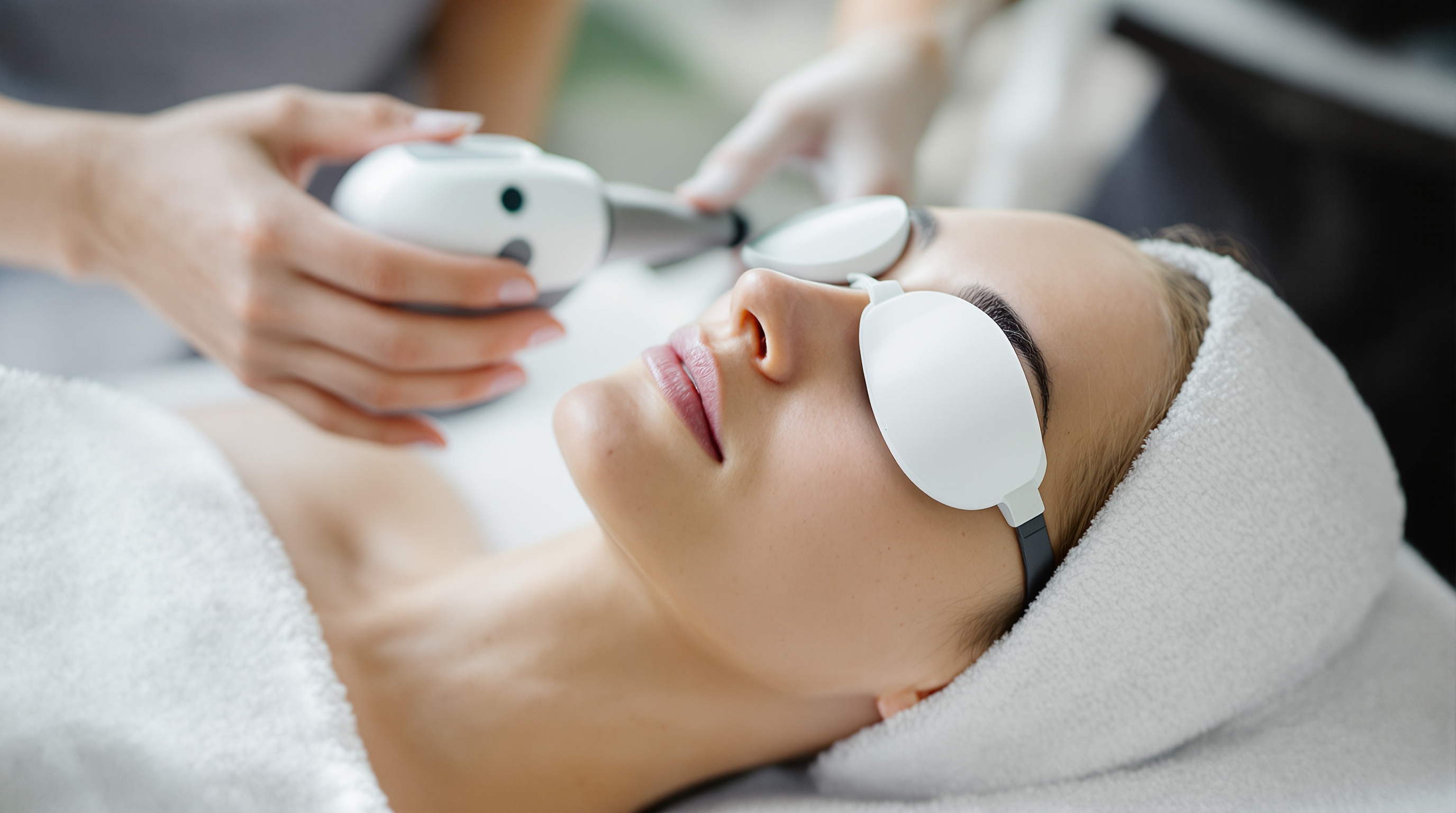
A typical treatment session lasts 15 to 30 minutes depending on the size of the area. Most patients describe the sensation as a series of small rubber-band snaps against the skin, moderated significantly by the cooling spray. The most common immediate side effect is purpura, a bluish-purple discoloration caused by red blood cell extravasation from the injured vessel wall. At conservative settings it may be absent or minimal. At higher settings designed to treat thicker or more resistant lesions, purpura can persist for seven to fourteen days. Patients are usually advised to avoid sun exposure and wear broad-spectrum SPF 30 or higher throughout the treatment course.
Results are rarely achieved in a single session. Port wine stains, for example, typically require six to twelve treatments or more, spaced four to six weeks apart, and even then complete clearance is unusual. Rosacea and fine facial telangiectasias often show meaningful improvement after two to four sessions. Hypertrophic scars and keloids can flatten and fade with a series of treatments that may also include corticosteroid injection as an adjunct. Practitioners generally schedule a reassessment after the second or third session to evaluate response and adjust parameters.
Cost varies considerably based on geographic market, practitioner credentials, and the size of the treatment area. A single session for a small facial area typically runs 300 to 600 dollars. Larger areas or full-face treatments can range from 600 to 1,200 dollars per session. Because most vascular and pigmentary conditions are considered cosmetic, insurance coverage is rare, though port wine stains in some cases qualify for partial reimbursement under specific medical necessity criteria.
Vbeam is not a device that suits every vascular condition or every patient. Its strengths lie in precision, a relatively well-understood safety profile across two decades of clinical use, and a meaningful body of published evidence. Its limitations include the risk of purpura, the need for multiple sessions, and reduced suitability for deeper skin tones without careful parameter adjustment. A board-certified dermatologist or laser surgeon is best positioned to evaluate whether the Vbeam platform is appropriate for a given lesion or whether a different wavelength, energy source, or combined approach would produce better outcomes with fewer side effects.
Related reading: How Many IPL Sessions for Sun Spots: A Clinical Explainer, How Painful Is Laser Resurfacing Really? A Clinical Breakdown.
More in Explainer
View all →- Melasma and Lasers: Why Lower Energy Usually Wins
- Fractional CO2 vs Non-Ablative 1550 and 1927 nm: How to Actually Choose a Resurfacing Laser
- 1550 nm or 1927 nm? What the Two Workhorse Fractional Wavelengths Actually Do to Your Skin
- Ablative vs. Non-Ablative Fractional Resurfacing: What the Wavelength Actually Decides