
Skin Concerns · June 4, 2026 · 5 min · By Hugo Lindenbaum
Pulsed Dye Laser vs IPL for Rosacea Redness: Clinical Comparison
Understanding how pulsed dye laser and IPL differ in treating rosacea, from mechanisms to recovery and realistic outcomes.
Pulsed dye laser vs IPL for rosacea represents one of the most common treatment decisions patients and dermatologists face when addressing persistent facial redness. Both technologies have clinical evidence supporting their use, yet they work through distinct mechanisms and carry different risk profiles depending on skin type and rosacea severity.
Rosacea typically manifests as persistent erythema, visible blood vessels, and sometimes papules or pustules. The underlying pathophysiology involves vascular instability and chronic inflammation. Light-based treatments address the vascular component by selectively heating oxyhemoglobin in red blood cells, causing vessel closure and eventual reabsorption by the body. For an independent overview, see Rosacea: causes, triggers, and treatment.
How Pulsed Dye Laser Works
The pulsed dye laser emits light at 585 to 595 nanometers, a wavelength absorbed primarily by hemoglobin. The device delivers energy in brief pulses (microseconds to milliseconds), allowing the laser to heat blood vessels while minimizing collateral damage to surrounding skin. This selectivity is called selective photothermolysis. Traditional pulsed dye lasers produce visible bruising (purpura) because the vessel walls are deliberately damaged to trigger closure. Newer long-pulsed systems can reduce bruising while maintaining efficacy.
Clinical studies show pulsed dye lasers effectively reduce erythema and telangiectasia (visible vessels) in rosacea. Improvement often requires multiple sessions, typically 4 to 6 treatments spaced 4 to 6 weeks apart. Results become apparent over weeks as the body clears damaged vessels.
How IPL Works
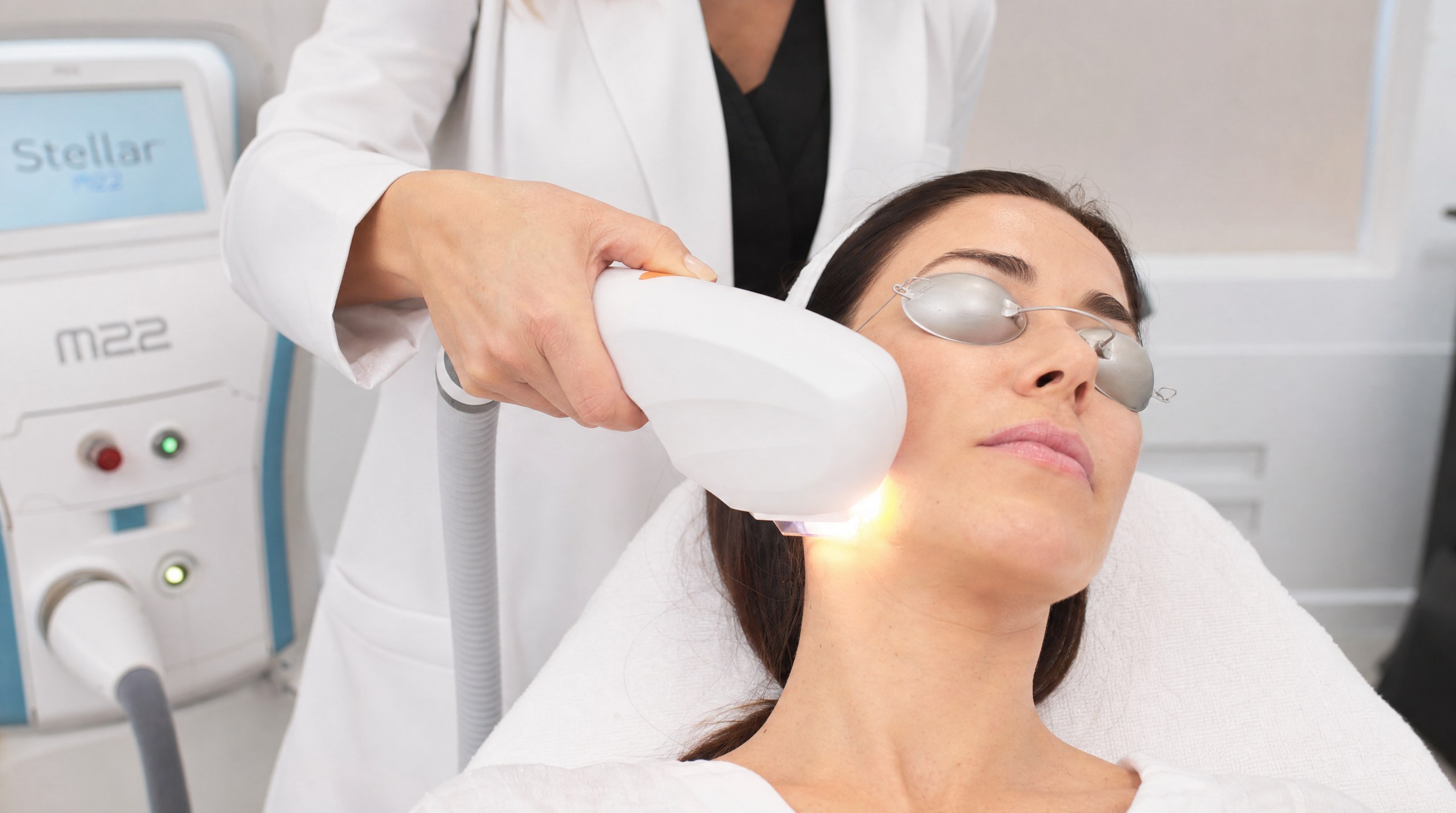
Intense pulsed light uses a broad spectrum (500 to 1200 nanometers) rather than a single wavelength. Practitioners filter this spectrum to target hemoglobin, melanin, or water depending on the clinical goal. IPL relies on the same selective photothermolysis principle but affects a broader range of tissue chromophores. This non-ablative approach typically produces less visible purpura than traditional pulsed dye lasers, though some erythema and transient bruising can occur.
IPL requires similar treatment frequencies to pulsed dye laser for rosacea management: 4 to 6 sessions separated by 3 to 4 weeks. Practitioners often recommend maintenance sessions annually or semi-annually to sustain results.
Clinical Efficacy and Outcomes
Both modalities show comparable efficacy in reducing rosacea erythema when applied appropriately. Meta-analyses suggest pulsed dye laser may have a slight edge for treating telangiectasia specifically, while IPL performs adequately for diffuse redness. Real-world results vary considerably. Some patients experience 70 to 80 percent improvement in redness after a complete course; others see 30 to 50 percent improvement. Rosacea is a chronic condition, and neither treatment offers permanent cure, though symptom control can last months to years between maintenance sessions.
Candidacy and Skin Type Considerations For related context, see our note on Laser treatments on darker skin tones: safety first.
Skin tone significantly influences treatment selection. Pulsed dye laser at 585 to 595 nanometers has less melanin absorption than IPL, making it safer for darker skin types. Patients with Fitzpatrick skin types IV to VI face higher risk of post-inflammatory hyperpigmentation with IPL due to broader wavelength absorption. For darker skin, pulsed dye laser or longer-wavelength alternatives like Nd:YAG laser (1064 nanometers) are preferred.
Patients with active rosacea flares, severe photosensitivity, or certain medications (isotretinoin, photosensitizing drugs) may need to defer treatment. Contraindications include active infection, recent sun exposure, and history of keloids or abnormal scarring.
Recovery Profile
Pulsed dye laser typically produces visible purpura lasting 7 to 14 days, depending on settings and skin sensitivity. Patients often describe the sensation as a rubber-band snap. Post-treatment erythema and mild edema resolve within 24 to 48 hours beneath the purpura. Most practitioners recommend avoiding sun exposure and intense exercise for one week.
IPL recovery is gentler. Transient erythema and mild purpura may appear but fade faster, often within 24 to 72 hours. Patients can usually return to normal activities immediately, though sunscreen is essential. Some patients experience mild crusting or temporary hypopigmentation.
Cost and Access
Pulsed dye laser treatment typically costs 300 to 800 dollars per session depending on treatment area and geographic location. IPL sessions often range from 200 to 600 dollars per treatment. Insurance rarely covers either modality for cosmetic rosacea management, though medical necessity claims sometimes succeed when rosacea significantly impacts quality of life.
Clinical Consensus
Neither technology represents a clear universal winner. Pulsed dye laser remains the gold-standard first-line treatment for rosacea according to most dermatologic guidelines, particularly for telangiectasia. IPL offers a gentler alternative with comparable efficacy for diffuse erythema and better tolerability for some patients. Treatment selection should reflect individual rosacea phenotype, skin type, tolerance for downtime, and practitioner expertise.
Related reading: Lasers for pigment and the special problem of melasma, CO2 laser vs erbium resurfacing: Key differences explained.