Skin Concerns · June 3, 2026 · 5 min · By Hugo Lindenbaum
Vbeam vs IPL for Facial Redness: How These Treatments Compare
A clinical look at how pulsed dye and intense pulsed light address rosacea, post-acne marks, and vascular lesions.
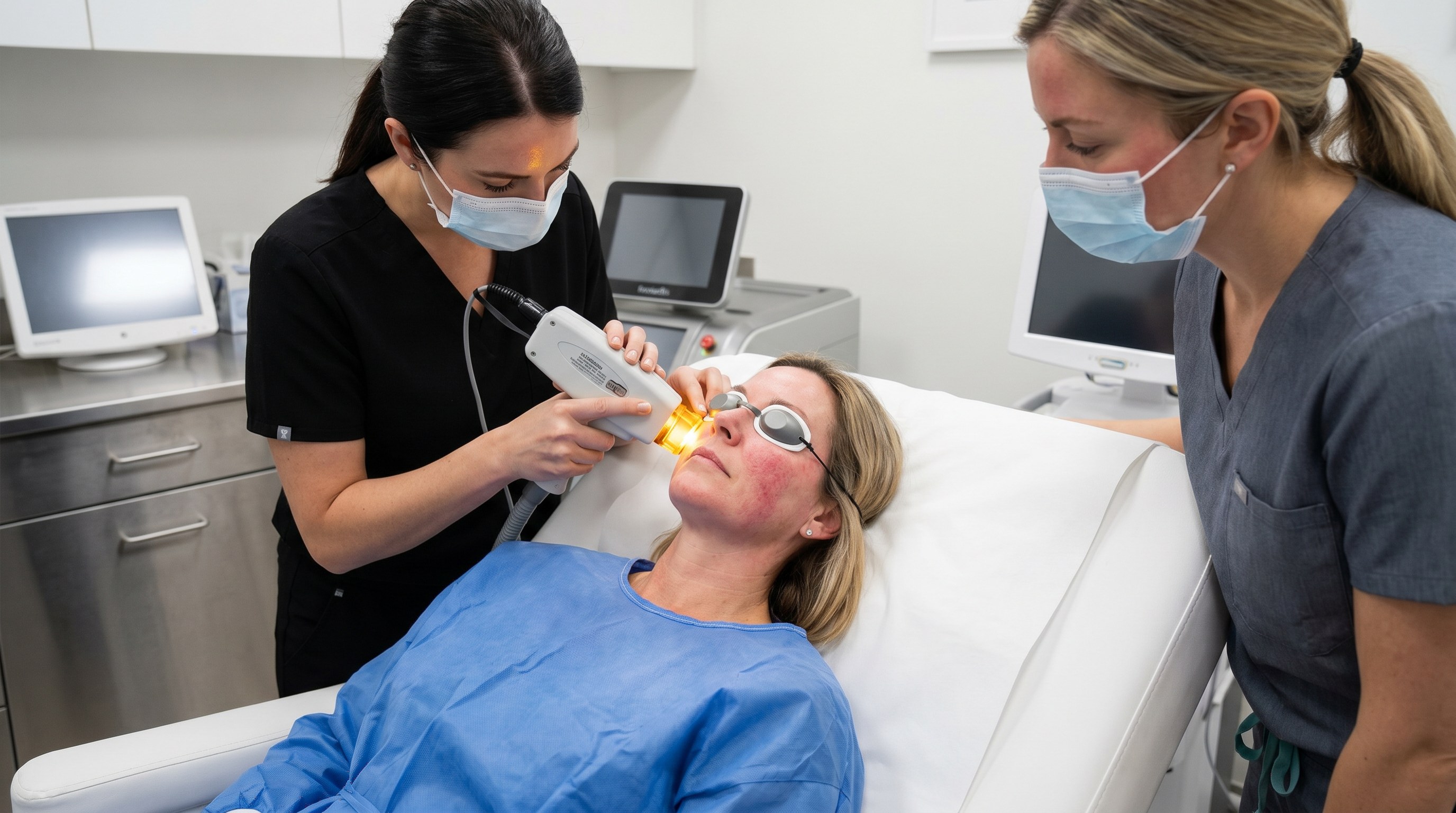
Vbeam vs IPL for facial redness represents one of the more common treatment comparisons patients face when addressing persistent facial redness, rosacea, and vascular lesions. Both devices use light energy to reduce unwanted red tones in skin, but they operate on different wavelengths and mechanisms. Understanding the distinction between them helps clarify which may be better suited to individual clinical presentations and skin types.
Vbeam is a pulsed dye laser that emits light at 595 nanometers, a wavelength specifically absorbed by hemoglobin, the oxygen-carrying protein in red blood cells. When the laser fires, it heats blood vessels beneath the skin surface, causing them to coagulate and gradually be reabsorbed by the body. This selective photothermolysis, meaning the light targets color-specific structures while sparing surrounding tissue, makes Vbeam particularly effective for vascular concerns like rosacea flare-ups, port-wine stains, and telangiectasia (dilated capillaries). For an independent overview, see Rosacea: causes, triggers, and treatment.
Intense Pulsed Light, or IPL, uses a broad spectrum of wavelengths (typically 500 to 1200 nanometers) delivered in pulses. Because IPL covers a wider range of wavelengths, it can address not only vascular issues but also pigmented lesions, sun damage, and general skin texture. However, this broader approach means less precise targeting of hemoglobin, which is why Vbeam is often considered more specific for vascular redness.
From a mechanism standpoint, Vbeam's narrow wavelength and high energy concentration make it particularly effective for bright red, vascular-dominant conditions. A patient with active rosacea characterized by persistent flushing and visible blood vessels may see faster improvement with Vbeam. IPL works well for patients whose facial redness includes both vascular and pigmentary components, such as sun-damaged skin with diffuse redness and age spots.
Candidacy differs between the two. Vbeam works across a broader range of skin tones because its 595-nanometer wavelength is less likely to be absorbed by melanin (the pigment that gives skin its color). This makes it safer for individuals with darker skin tones who might experience unwanted pigmentation changes from devices like traditional IPL. Patients with darker skin and significant facial redness are often steered toward Vbeam or longer-wavelength Nd:YAG lasers rather than IPL, which carries higher risk of post-inflammatory hyperpigmentation in darker skin.
IPL, by contrast, performs best on fair to medium skin tones. The broader wavelength range means greater melanin absorption, which increases the risk of pigmentation complications in darker skin. Practitioners typically avoid IPL in individuals with darker complexions or history of keloids and post-inflammatory hyperpigmentation. For related context, see our note on Ablative vs. non-ablative laser resurfacing.
Recovery profiles also differ. After Vbeam treatment, patients commonly experience purpura, a temporary purple or dark red discoloration from small vessel rupture and hemoglobin breakdown. This usually resolves within 7 to 14 days. Some patients describe mild discomfort during treatment, often managed with topical anesthetic. After IPL, purpura is less common; instead, patients may notice mild erythema (redness) and possibly temporary darkening of pigmented spots before they flake off. IPL recovery is generally considered milder, though results may take longer to manifest.
Results timelines vary. Vbeam improvement in rosacea redness can be noticeable after one to two treatments, with cumulative benefit over three to five sessions spaced 4 to 6 weeks apart. Some patients require maintenance treatments annually. IPL results also develop over multiple sessions, typically four to six treatments at similar intervals, though some improvement may be visible after a single session.
Cost considerations reflect the technology differences. Vbeam treatment typically ranges from 300 to 500 dollars per session, while IPL costs generally fall in the range of 250 to 450 dollars per session. Final cost depends on treatment area size, provider location, and whether anesthesia is used. A full course of treatment (three to six sessions) may total 1500 to 3000 dollars for either modality.
Neither treatment is permanent. Vascular redness can recur, especially in rosacea-prone individuals exposed to ongoing triggers like heat or alcohol. IPL results fade over time, typically requiring maintenance sessions every 6 to 12 months. A dermatologist can help determine which device aligns better with a patient's specific clinical presentation, skin tone, and treatment goals.
Related reading: How to choose the right laser treatment for your concern, Laser treatment for acne scars.