
Skin Concerns · April 4, 2026 · 5 min · By Ezra Caulfield
What Is Laser Genesis and What It Does for Tone and Texture
A plain-English breakdown of how Laser Genesis works, who it suits, and what results actually look like.
What is laser genesis, exactly? It is a non-ablative, non-fractional laser treatment that uses a 1064-nanometer Nd:YAG wavelength to deliver gentle, repeated pulses of heat into the upper dermis without breaking the skin surface. Unlike resurfacing lasers that remove tissue, Laser Genesis works entirely below the epidermis, making it one of the milder options in a clinic's toolkit.
The mechanism centers on controlled subdermal heating. The 1064 nm wavelength passes through the epidermis with minimal absorption by melanin, then warms the dermis to a therapeutic temperature. That warmth has two primary effects. First, it targets dilated capillaries near the surface, causing them to constrict and reducing the appearance of diffuse redness and rosacea-related flushing. Second, the gentle heat signals fibroblasts to increase collagen synthesis, which over a series of sessions gradually improves skin texture, softens fine lines, and reduces the appearance of large pores. For an independent overview, see Laser resurfacing: what to know.
Because the 1064 nm wavelength has low melanin affinity, Laser Genesis has a notably favorable safety profile across a broad range of skin tones, including Fitzpatrick types IV through VI. Many treatments that address redness or texture carry a meaningful risk of post-inflammatory hyperpigmentation in darker skin. Laser Genesis, used at appropriate parameters, is considered a lower-risk option in those populations, though provider experience with darker skin tones still matters considerably and a thorough consultation remains essential.
Candidacy is fairly broad. People typically seek Laser Genesis for diffuse redness, rosacea, uneven texture, enlarged pores, mild acne scarring, and early signs of collagen loss. It is not the right tool for deep wrinkles, significant laxity, or pronounced pigmented lesions. Those concerns generally call for fractional or ablative platforms, or for a combination approach. A single Laser Genesis session will not accomplish much on its own. Providers typically recommend a series of four to six sessions spaced two to four weeks apart to see meaningful improvement in collagen density and vascular tone.
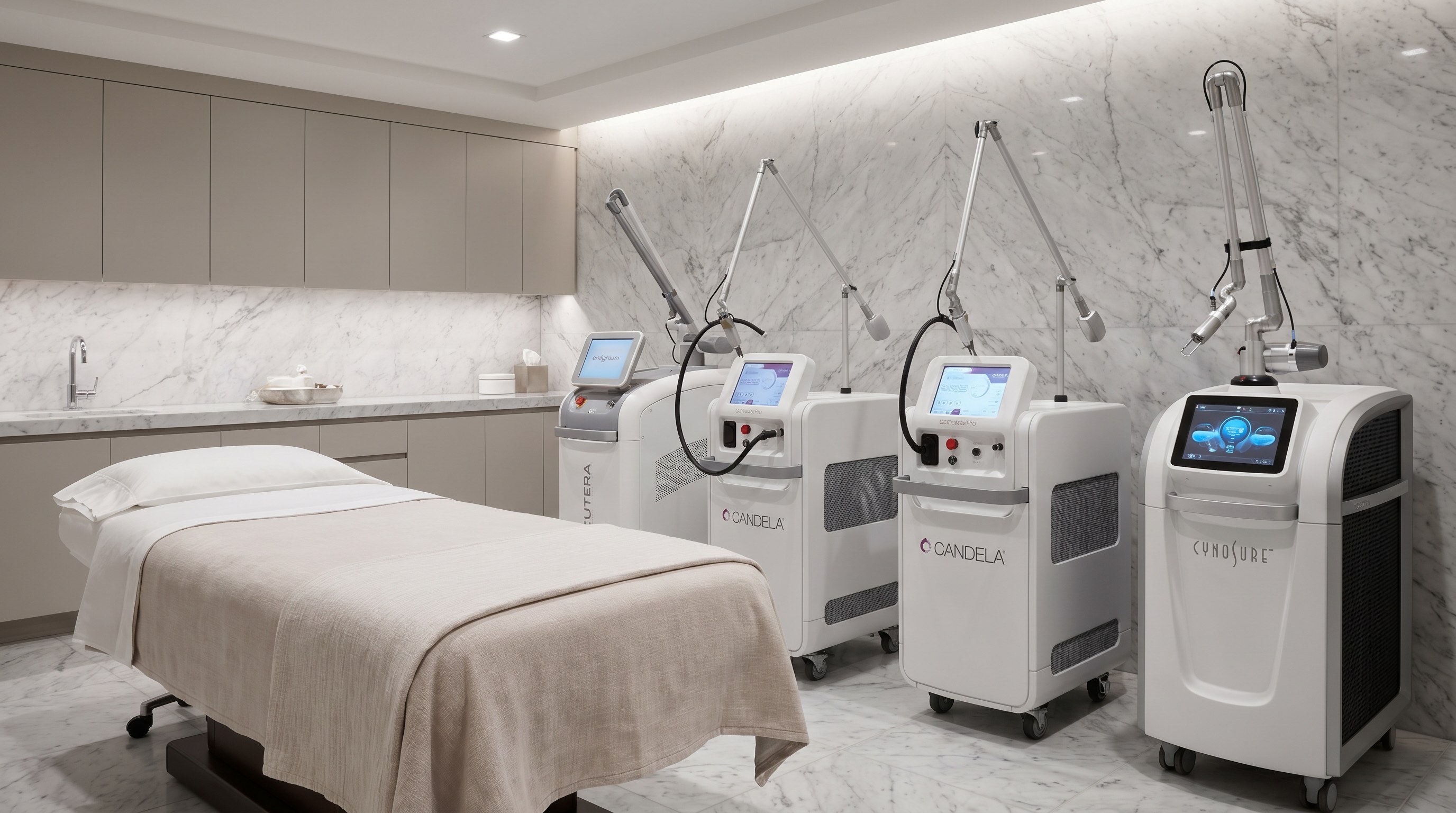
For a deeper clinical breakdown of how non-ablative laser platforms compare in real practice, talk with a clinician who works with several of them.
The treatment itself is described by most patients as feeling like repeated light warmth on the skin, sometimes compared to the sensation of sunlight on the face. There is no topical anesthetic required for most people. A single session runs approximately 20 to 30 minutes for the full face. Because the epidermis is not disrupted, there is essentially no recovery period. Patients typically return to normal activity immediately, with mild transient redness that resolves within a few hours. For related context, see our note on Laser for Dark Spots from Acne: How Post-Inflammatory Hyperpigmentation is Treated.
Results build gradually rather than appearing as a dramatic before-and-after. After a full initial series, patients commonly report smoother texture, reduced visible pore size, and calmer background redness. Collagen remodeling continues for weeks after each session, so the final result of a series is generally not fully visible until six to eight weeks after the last treatment. Maintenance sessions, often once every one to three months, help sustain those gains over time.
On the cost side, individual sessions typically range from 300 to 600 dollars depending on the practice, the geographic market, and the size of the treatment area. Package pricing for a series of five or six sessions often brings the per-session cost down somewhat. Because Laser Genesis addresses cosmetic concerns, it is not covered by insurance.
A few practical considerations are worth noting. Patients with active inflammatory acne should discuss timing with their provider, as the heat can theoretically aggravate active breakouts even while improving post-acne texture over time. Sun protection before and after each session is standard protocol because even mild UV exposure can compromise results and increase skin sensitivity around treatment days. Patients on photosensitizing medications should disclose those to their provider in advance.
Laser Genesis occupies a specific and useful niche: a low-downtime, broadly tolerated treatment for diffuse redness, mild texture irregularities, and early collagen maintenance. It is not a substitute for more aggressive resurfacing when significant structural change is the goal, but for patients who cannot afford downtime or who need an option suited to darker skin tones, it represents a clinically grounded choice with a clear mechanism and a reasonable evidence base behind it.
Related reading: Ablative vs. non-ablative laser resurfacing, Melasma After Pregnancy: Where Laser for Hormonal Melasma After Pregnancy Fits in Treatment.
More in Explainer
View all →- Melasma and Lasers: Why Lower Energy Usually Wins
- Fractional CO2 vs Non-Ablative 1550 and 1927 nm: How to Actually Choose a Resurfacing Laser
- 1550 nm or 1927 nm? What the Two Workhorse Fractional Wavelengths Actually Do to Your Skin
- Ablative vs. Non-Ablative Fractional Resurfacing: What the Wavelength Actually Decides